
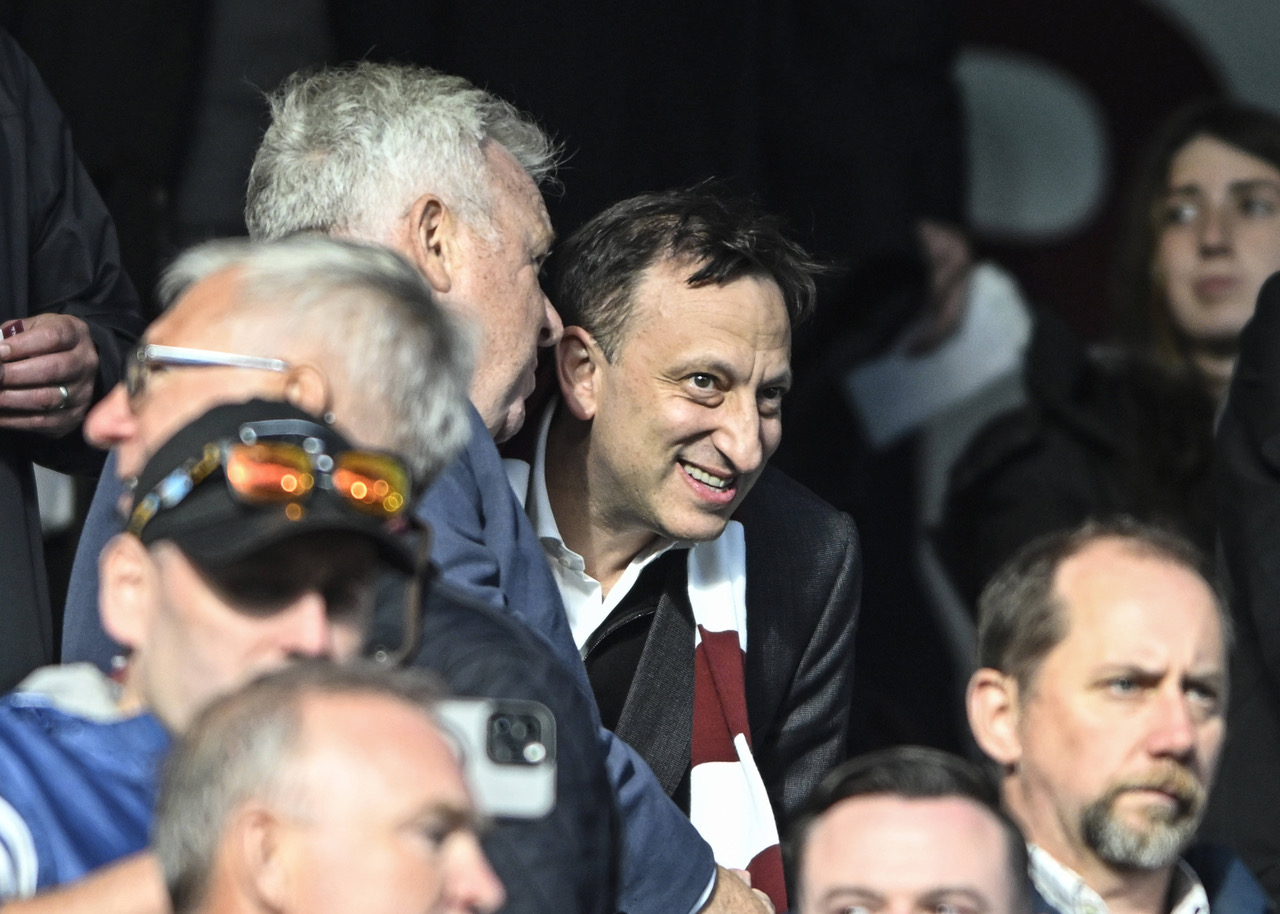
Hearts’ Data-Driven Rebuild
Heart of Midlothian’s data-driven rebuild under Tony Bloom has quickly become one of the most intriguing stories in British football. Sitting top of the Scottish Premiership after eight games, Hearts’ transformation represents a new era of strategic clarity, sustainability, and innovation — themes central to how successful clubs align long-term vision with daily operations, as explored in our analysis here.
Bloom’s acquisition of a 29 per cent non-voting stake in August 2025, through Starlizard Consulting Ltd., signals a calculated, analytical entry into Scottish football. While the Foundation of Hearts retains majority ownership (51 per cent), Bloom’s influence has introduced enhanced data systems, recruitment modelling, and operational alignment — reinforcing the principles discussed in our piece on Balancing Sporting and Organisational Goals.
Context: a changing landscape in Scottish football
Scottish football has long been a duopoly, yet both Celtic and Rangers now face questions that extend beyond the touchline. Celtic’s revenue dominance remains unchallenged, but uncertainty in the boardroom has disrupted consistency. Rangers, meanwhile, continue to wrestle with identity and direction.
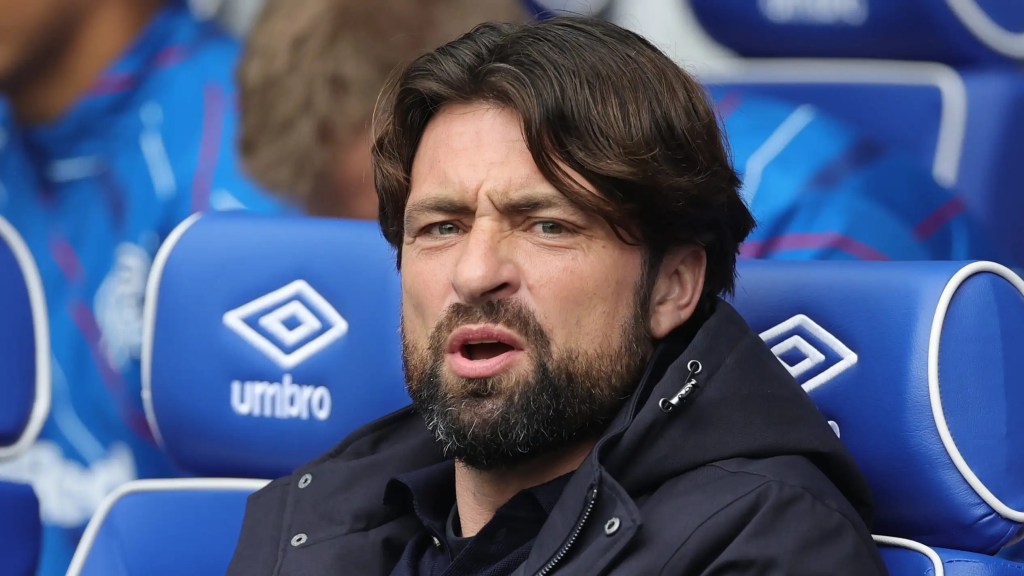
Recently dismissed by Rangers after just 17 games, Russell Martin’s departure highlights the structural instability that continues to define leadership at Ibrox — a sharp contrast to the analytical alignment emerging at Hearts under Tony Bloom.
Against that backdrop, Hearts’ clarity stands out. Their resurgence isn’t fuelled by heavy spending or opportunistic gambles; it’s built on efficiency, analysis, and a well-defined operational framework. In an era when Scottish football’s broadcast deals remain undervalued and club finances stretched, Hearts have become a rare example of what joined-up thinking can deliver.
Financial evolution and the Hearts Data-Driven Rebuild
The club’s 2023/24 accounts showed a turnover of £20.25 million and a modest loss of £1.2 million, reflecting a deliberate reinvestment phase. Net assets of around £20 million provide a cushion for growth. Bloom’s £9.86 million injection via Starlizard has enhanced operational capability and modernised internal systems.
Operating costs increased by 9% year-on-year as the club invested in infrastructure and player development. This approach mirrors the early years of Bloom’s work at Brighton — short-term costs designed to establish long-term value creation.
The 2025/26 transfer window reflected fiscal discipline and strategic focus:
Expenditure: €2.97 million
Income: €2.30 million
Net balance: –€0.67 million
Sixteen players arrived from Portugal, Belgium, Norway, Italy, Slovakia, and Iceland, illustrating a clear intent to explore undervalued markets. The headline signing, Ageu from Santa Clara (€2.0m), while Cláudio Braga (€520k from Aalesund) leads the league in goals.
With an average arrival age of 24.4, Hearts’ recruitment model values growth and adaptability over reputation — a blueprint built to sustain itself.
Squad development and competitiveness
Under Derek McInnes (appointed May 2025), Hearts have become a well-drilled, data-conscious side. Their metrics tell the story:
-
xG differential: +9.4 (league-best)
-
xG per shot: 0.15 (up from 0.10 last season)
-
Non-penalty goals: 17 (league-leading)
-
PPDA: 9.7 (third-lowest, reflecting compact pressing)
After eight matches, they’ve collected 22 points with a +13 goal difference. Hearts are not just outperforming expectations — they’re doing so with tactical consistency and minimal variance.

Bloom’s data-driven approach at Hearts mirrors the long-term, efficiency-based model that transformed Brighton & Hove Albion into a sustainable Premier League contender.
Braga’s eight goals, supported by Lawrence Shankland’s four, have given McInnes both cutting edge and reliability. It’s the first time since 2018/19 that two Hearts players have sat in the Premiership’s top five scorers.
The playing style is unmistakably analytical — compact build-up, structured transitions, and an emphasis on high-value shot creation. It’s a direct reflection of Bloom’s Brighton-era philosophy, adapted to Scottish conditions.
Market value and comparative positioning
According to Transfermarkt, Hearts’ squad value has risen from €16.7m (Jan 2025) to €18.72m (Oct 2025) — a 12.1% increase, the third-highest growth in the league.
Celtic (€132.6m) and Rangers (€104.4m) remain far ahead financially, but Hearts deliver more points per €1m of squad value than either. In efficiency terms, no one comes close.
| Club | Points | Market Value (€m) | Change vs Jan 2025 | Avg Age | Points per €1m | Top Scorer (Goals) |
|---|---|---|---|---|---|---|
| Heart of Midlothian | 22 | 18.72 | +12.1% | 27.7 | 1.18 | Cláudio Braga (8) / Shankland (4) |
| Celtic | 19 | 132.65 | –5.9% | 26.1 | 0.14 | Daizen Maeda (3) |
| Rangers | 9 | 104.45 | –2.3% | 25.0 | 0.09 | Benjamin Nygren (4) |
| Hibernian | 11 | 20.50 | –2.6% | 25.4 | 0.54 | Elie Youan (3) |
| Dundee United | 10 | 7.13 | +4.0% | 25.2 | 1.40 | Ivan Dolcek (5) |
| Kilmarnock | 10 | 8.93 | +3.9% | 25.6 | 1.12 | David Watson (3) |
| Falkirk | 9 | 7.48 | +54.7% | 26.4 | 1.20 | Ross MacIver (2) |
| St Mirren | 9 | 9.61 | +8.7% | 26.8 | 0.94 | Declan John (1) |
| Livingston | 8 | 7.85 | +54.7% | 27.0 | 1.02 | Scott Pittman (3) |
| Aberdeen | 8 | 22.00 | –5.9% | 25.4 | 0.36 | Jesper Karlsson (2) |
| Dundee FC | 9 | 7.13 | +4.0% | 25.2 | 1.26 | Ryan Astley (1) |
| Motherwell | 8 | 9.03 | –0.2% | 27.9 | 0.89 | Tawanda Maswanhise (4) |
Source: Transfermarkt (market values & points, 20 Oct 2025); Sentinel Sports Group analysis
A New Model for Scottish Football
What Hearts are building isn’t just a short-term surge; it’s a challenge to the very structure of Scottish football. The Premiership’s overreliance on Glasgow’s powerbase has often stifled growth, but Bloom’s involvement reopens that debate.
His methods at Brighton — combining data, patience, and pragmatism — show how a club can compete with better-funded rivals by being smarter. Hearts now stand as proof that the same principles apply in Scotland.
The ripple effects are significant:
Commercially, the emergence of a genuine third contender strengthens the league’s narrative and marketability.
Competitively, data-led planning forces others to evolve.
Culturally, it demonstrates that supporter ownership and modern analytics can coexist — preserving identity while raising ambition.
Challenges persist — stadium utilisation outside Glasgow still sits below 70%, and the league’s UEFA coefficient remains fragile. But Hearts have shown that clarity of purpose can overcome historical ceilings.
Bloom’s Early Impact
In just five months, the project has delivered measurable returns:
Squad value up 12%
League position up five places year-on-year
Recruitment footprint expanded from five to ten markets
Cohesion maintained despite a higher volume of foreign signings
This is a practical demonstration of how alignment — rather than excess — drives progress in smaller markets.
Outlook
Hearts’ 2025/26 campaign has already shifted expectations of what’s possible in Scottish football. With European qualification in view, the focus now turns to maintaining balance: regenerating the squad without losing its data-led edge.
Key priorities will include:
Integrating younger, data-identified players into the core group.
Using player development to fund reinvestment.
Synchronising player lifecycle planning with Starlizard’s predictive models.
If the model holds, Hearts could become the benchmark for sustainable competitiveness — not only in Scotland, but across mid-tier European football.
Sources: Heart of Midlothian FC reports; Hearts FC official site; Transfermarkt (20 Oct 2025); Opta; Sentinel Sports Group analysis.
Discover more from Sentinel Sports Group
Subscribe to get the latest posts sent to your email.
